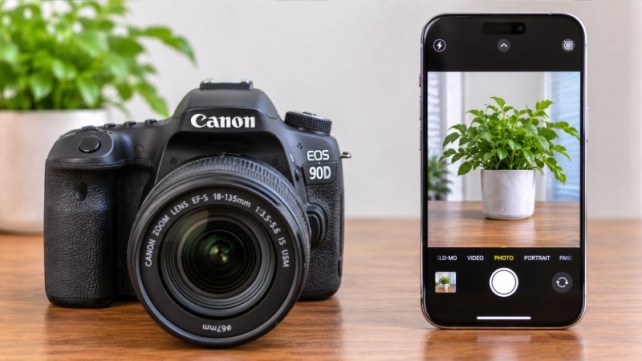
Let me start with a confession that would have gotten me kicked out of every camera forum in 2021: I sold my Sony A7S III, and I don’t miss it.
This isn’t a clickbait stunt. I didn’t sell it because I’d run out of money or because I woke up one morning and decided cameras were dead. I sold it because, after years of lugging a full-frame cinema-grade machine around the world, I did something uncomfortable. I tracked what I actually did with it. Then I compared that to what my audience actually responded to. The gap between the two was embarrassing.
This post is the full story: the gear-lust years, the moment the math stopped working, the side-by-side tests that humbled me, and an honest account of what I gave up. If you’re a vlogger standing in front of a cart full of camera gear right now, I’m going to try to save you some money and some back pain.
A quick note before we begin: I’m not selling you anything, I’m not sponsored by a phone maker, and I’m not telling you the A7S III is a bad camera. It’s one of the best video cameras ever made for its size. That’s exactly what makes this story interesting.
The Romance Phase: Why I Bought the A7S III
When the A7S III came out, it felt like the answer to every complaint vloggers had been muttering for years. Incredible low-light performance from its 12-megapixel sensor. Clean 4K at high frame rates. 10-bit 4:2:2 color. A fully articulating screen. Rock-solid autofocus. A battery that didn’t die in the middle of a take. And that unmistakable Sony color science, with S-Cinetone giving skin tones a pleasing cinematic roll-off straight out of camera.
I bought it the way a lot of creators buy gear: aspirationally. I wasn’t the vlogger I was; I was the filmmaker I imagined I’d become. I pictured moody night streets, slow-motion b-roll shot at 120 frames per second, and a color grade that would make my channel look like a streaming series.
And for a while, it delivered. My night footage looked like magic. The slow motion was gorgeous. Clients who hired me for branded content noticed the difference. For a long time, I would have told you that the camera paid for itself.
But “paid for itself” and “was the right tool for my vlogging” turned out to be two very different statements.
The Slow Realization: Friction Is a Hidden Cost
Here’s what nobody puts in a spec sheet: every piece of gear has a friction cost, and friction decides whether you make content or don’t.
My A7S III setup, when I was really committed to it, looked like this:
- The body itself, which is no featherweight
- A wide lens, because vlogging means you need to fit yourself and the world in frame
- A second lens for b-roll, because one lens never covers a day
- A shotgun mic with a dead cat, because the on-board audio is not why you buy this camera
- A cage and a handle for rigging
- Three or four batteries, a charger, and a power bank
- Fast, expensive memory cards, plus a card reader, plus a backup drive
- A small tripod or gimbal, depending on the day
- A camera bag big enough to hold all of it, which meant a bag big enough to be annoying
Individually, none of these things is a dealbreaker. Together, they’re a tax. And I started noticing that the tax showed up in my behavior.
On days when I was tired, I didn’t film. On days when something spontaneous happened, like a street performer, a perfect sunset, or a funny interaction with a stranger, I’d think about getting the camera out, assessing exposure, checking focus mode, making sure I had a card, and by the time I’d decided it was worth it, the moment was gone.
Meanwhile, my phone was in my pocket. Always. Fully charged, almost always. Ready in about two seconds.
That contrast kept nagging at me. The best camera isn’t the one with the best sensor. It’s the one you actually have out when the moment happens. That’s a cliché because it’s true.
The Uncomfortable Audit
I decided to run an experiment. For three months, I tracked every piece of content I published: how it was shot, how long it took to produce, and how it performed. I’m not going to pretend this was scientific. But the patterns were hard to ignore.
Time spent per video. Videos shot on the Sony took, on average, noticeably longer from idea to upload. Not just in editing, but in prep, offloading, backing up, transcoding, and grading. The files were big, the workflow was heavy, and my laptop’s fans sounded like a small aircraft.
Audience response. Here’s the part that stung. Viewers didn’t reward me for the extra effort. Some of my most-watched, most-commented videos were shot on a phone, often in casual conditions, because the story and personality carried them. Meanwhile, a few of my most polished camera-shot videos performed average at best.
Publishing consistency. In months where I used the camera exclusively, I published less. Period. In months where I let myself use the phone for the bulk of the vlogging, I published more, and the channel grew faster.
The lesson wasn’t that image quality doesn’t matter. It’s that image quality has diminishing returns, and I’d passed the point where it was the limiting factor on my channel’s growth. The limiting factor was me, my energy, and my consistency.
The 2026 Phone Is Not the Phone You Remember
I want to be fair here, because the “just use your phone” argument has been around for a decade and for most of that time it was only half true. Phones were great in daylight and fell apart everywhere else. Here’s what changed.
Computational photography grew up
Modern flagship phones don’t just record light; they interpret it. Multi-frame processing, AI-driven noise reduction, and smart tone mapping happen in real time on video now, not just stills. The result is footage that looks clean in situations where phones used to turn into watercolor paintings.
Is it as good as a large sensor in a dark room? No. Physics still wins that argument. But the gap that used to be a canyon is now a crack in the pavement.
Stabilization is borderline absurd
This is the single biggest quality-of-life upgrade for vloggers. Walking-and-talking footage from current flagship phones, with their combined optical and electronic stabilization and dedicated action or cinematic stabilization modes, often looks like it came off a gimbal. I used to carry a gimbal specifically to get this look. Now I just hold the phone.
Autofocus that actually follows a human
Subject tracking on phones has become remarkably reliable, particularly for faces. The camera knows you’re the subject, keeps you sharp as you move, and rarely hunts when you turn away and back. For a solo creator, that’s huge. I’ve had more missed focus moments on dedicated cameras in tricky scenarios than I’d like to admit.
Log and pro video modes arrived
Many flagship phones now offer log-style or flat color profiles, higher bit-depth recording, and external storage options. If you like to grade, you can. If you don’t, the standard processed look is good enough that most people won’t notice or care.
The ecosystem is the real killer feature
Here’s the thing I underestimated: my phone is also my editor, my uploader, my reference monitor, my audio recorder, my notes app, and my distribution platform. I can shoot, cut, caption, and post from the same device, in the same hour, from a train seat. That compresses the loop between idea and published video in a way no standalone camera can match.
The Side-by-Side That Humbled Me
Before I sold the Sony, I did what any reasonable person would do: I tried to prove myself wrong. I shot the same scenarios on both devices.
Scenario 1: Bright daylight, walking and talking. Honestly, a near tie. At normal viewing sizes on a phone screen, which is where most vlogs are watched, I couldn’t consistently tell which was which. The Sony had slightly more natural depth of field. The phone had better stabilization and a more consistent exposure.
Scenario 2: Golden hour portrait. The Sony won on pure aesthetics. Skin tones were gorgeous and the background blur felt organic. The phone’s portrait processing was good, but occasionally gave away its artificial edge detection around hair.
Scenario 3: Indoor, moderate light. Closer than I expected. The phone brightened and cleaned the footage aggressively, sometimes a bit too aggressively, but it looked pleasant.
Scenario 4: Night street, minimal light. This is where the A7S III earns its reputation. The Sony footage was clean, natural, and flexible in post. The phone footage was usable but showed smoothing, a little softness, and some of that telltale processed look.
Scenario 5: Quick, unplanned moments. The phone won by default, because it was out and recording before the Sony even left the bag.
So the result: the Sony won two scenarios outright, the phone won one outright, and the others were effectively draws once you factored in how people actually watch videos. When I ran that tally honestly, I realized I was hauling a very expensive tool to win the scenarios that mattered least to my audience.
What I Actually Gave Up
I promised honesty, so here’s the part the “phones are all you need” crowd tends to skip.
Low light and dynamic range. Phones are better than they’ve ever been, but a big sensor still handles harsh contrast and darkness more gracefully. If you shoot a lot of night content, concerts, or dim interiors, you’ll feel the difference.
True shallow depth of field. Optical blur from a fast lens on a full-frame sensor has a character that software still imitates rather than replicates. You’ll see it in edge cases.
Lens flexibility. Swapping glass changes your creative vocabulary. A phone gives you a handful of fixed focal lengths and that’s it. You get good at working within them, but it is a constraint.
Slow motion at the highest quality. The A7S III’s high-frame-rate options were something special. Phones can do slow motion, but with more compromises in resolution and processing.
Audio expectations. Neither device excels at built-in audio, but a camera with a proper hot shoe and mic ecosystem is easier to build up. On a phone, you’re relying on wireless lavaliers or adapters, which work great but add their own small friction.
The feeling. I’ll admit it: there’s a pleasure in operating a real camera. The dials, the shutter sound, the sense of craft. Selling it meant giving up some of that joy.
What I Gained
Now the other side of the ledger.
Weight and space. My daily carry went from a heavy bag to a pocket and a tiny mic. I started bringing the camera, meaning the phone, everywhere, which brings me to the biggest gain.
Consistency. I film more. I film smaller moments. I film the in-between stuff that turns out to be what people connect with.
Speed. Idea to upload went from days to hours. That speed made me braver. When posting is cheap, a bad video costs nothing, and you learn faster.
Money. Selling the camera and a couple of lenses recouped a large chunk of what I paid. I put some of it into a good wireless mic system, a compact light, and a few accessories, and still came out ahead.
Mental energy. I didn’t realize how much cognitive load the gear was adding. Checking settings, worrying about cards and batteries, babysitting a rig. Taking that away freed up attention for the thing the audience actually came for: me, my stories, my perspective.
The Smartphone Vlogging Kit I Actually Use
If you’re considering the switch, here’s what I’d put together. I’m deliberately describing categories rather than brands, because the specific models change every year.
- A current flagship phone with a strong main camera and good stabilization. Don’t buy for megapixel counts; buy for video processing, stabilization, and front-camera quality.
- A wireless lavalier or clip-on mic system. Audio is half of vlogging, and this is the single best upgrade you can make. Clean sound makes mediocre video feel professional.
- A compact grip or small tripod. Something that doubles as a handle and a stand.
- A small portable LED light. One soft source in dim spaces does more than any sensor upgrade.
- A magnetic or clamp mount. Hands-free filming and quick mounting on bikes, tables, and railings.
- A lightweight ND filter for bright days (optional). Helps keep shutter speed natural and motion looking cinematic.
- A power bank and fast storage plan. Video files are big. Know where they’re going.
Total cost, including the phone if you upgrade, can still be less than a full-frame body alone. And the phone does the rest of your life too.
Who Should NOT Do What I Did
I don’t want this post to turn into a blanket prescription. Here’s who should probably keep the camera.
- Night and low-light specialists. If your content lives in dark environments, a big sensor is still your friend.
- Commercial and client filmmakers. If people pay you for cinematic image quality and expect specific deliverables, the camera is a business tool.
- Shallow-depth-of-field storytellers. If your visual identity depends on organic, lens-driven blur and a specific look, a dedicated camera earns its keep.
- People who love the craft. If using a camera brings you joy, and that joy makes you create more, that’s a legitimate reason to keep it. Enjoyment is a performance metric too.
- Creators who already film consistently. If your workflow is smooth and your output is high, don’t fix what isn’t broken.
Who Should Seriously Consider the Switch
- Solo vloggers who produce, shoot, and edit everything themselves.
- Travel creators who value weight and spontaneity.
- Creators who feel gear-anxious or stuck in a perpetual upgrade loop.
- Anyone whose camera spends more time in a bag than in their hands.
- New vloggers deciding where to put their first budget. Spend it on audio and lighting, not a body.
If you recognize yourself in that last list, here’s a test: look at the last ten things you posted. How many used the full capabilities of your camera? If the answer is “almost none,” you may be paying for performance you never cash in.
The Bigger Lesson: Gear Is Not the Strategy
The real reason I sold the A7S III isn’t about megapixels or sensor size. It’s about honesty regarding what moves the needle.
Viewers follow vloggers for a few reasons: personality, story, usefulness, and consistency. They do not subscribe for your dynamic range. They don’t tune in for your codec. They never write a comment saying, “Love the 10-bit color depth, great job.” They say, “Your video made my day,” or, “I learned something,” or, “I felt like I was there.”
Good image quality removes barriers: it makes you look professional and keeps people from clicking away. But once the footage is clean, stable, well-exposed, and well-sounded, additional technical quality yields smaller and smaller returns. What yields larger and larger returns is more videos, better stories, and sharper editing.
The phone didn’t make me a better filmmaker. It made me a more frequent one, and frequency is a skill multiplier. Every video I make teaches me something about hooks, pacing, and framing. More reps beat better gear.
Final Verdict
Would I recommend that every vlogger sell their camera? No. Would I recommend that every vlogger honestly audit their gear against their actual output? Absolutely.
For me, the A7S III was a brilliant tool for a version of my career that didn’t exist. I wanted to be a filmmaker; I turned out to be a storyteller who happens to film. The phone fits that identity better. It’s lighter, faster, more discreet, more spontaneous, and more than good enough for the vast majority of what I make.
I sold a camera and bought back time, energy, and consistency. In the 2026 vlogger economy, those are the scarcest resources there are.
If you take one thing from this post, let it be this: buy the gear that gets you to hit record, not the gear that impresses people who aren’t watching.