Most creators guess. The best ones test. Here’s how to run A/B tests on your titles and thumbnails so every data point moves your click-through rate in the right direction.
Why most creators skip testing — and pay for it
Your title and thumbnail are the only two things standing between your content and a click. No matter how good the video, article, or post is, if no one clicks, no one sees it. Yet most creators publish once and move on, assuming the first version was good enough.
That’s leaving serious growth on the table. A/B testing lets you replace assumptions with real audience behavior — and even small improvements in click-through rate (CTR) compound dramatically over time.
What A/B testing actually means for titles and thumbnails
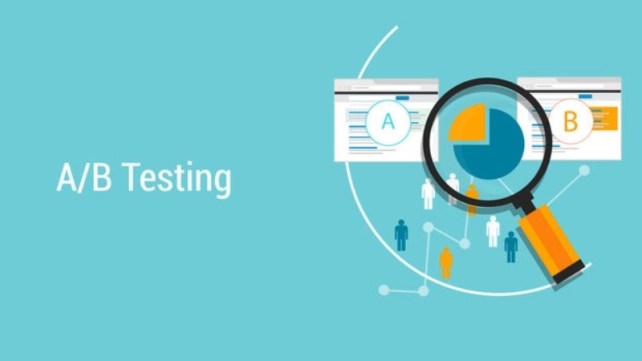
A/B testing means showing two versions of the same content — Version A and Version B — to different segments of your audience under the same conditions, then measuring which one performs better.
For creators, this typically means:
- Two different thumbnail designs for the same video
- Two differently worded titles targeting the same topic
- Testing emotional vs. factual framing in headlines
- Testing curiosity-driven vs. benefit-driven copy
The right way to set up a test
Bad tests produce noise. Good tests produce actionable data. Follow this structure every time:
Step 1 — Change only one variable
If you change both the title and thumbnail at the same time, you won’t know which one drove the change in performance. Test one element at a time, always.
Step 2 — Define your success metric before you start
CTR is the obvious one, but also consider average view duration, impressions, and subscriber conversion. Know what “winning” means before the test begins.
Step 3 — Wait for statistical significance
Don’t call a winner after 200 impressions. You need enough data — usually at least 1,000–2,000 impressions per variant — before the results are trustworthy. Patience is part of the process.
Step 4 — Test under the same conditions
Don’t run Version A on a Monday and Version B on a Friday. Audience behavior changes by day and time. Use platform-native testing tools when possible, as they split traffic simultaneously.
Testing titles: what actually moves the needle
Not all title changes are worth testing. Focus your energy on the variables that have the most psychological impact:
- Curiosity gap vs. clear benefit — “I tried this for 30 days” vs. “How to build muscle in 30 days”
- Numbers vs. no numbers — Specific figures (“7 mistakes”) tend to outperform vague claims
- First-person vs. second-person framing — “I quit my job” vs. “How to quit your job”
- Short vs. long — Sometimes a punchy 5-word title beats a detailed 12-word one
- Question vs. statement — “Is this the best budget laptop?” vs. “The best budget laptop in 2025”
- Emotional words vs. neutral language — “brutal,” “shocking,” “honest” often increase curiosity
Testing thumbnails: the elements that drive clicks
Thumbnail testing is more visual, but the same discipline applies. Here are the highest-impact variables to test:
- Face vs. no face — Human faces with strong expressions almost always increase CTR
- Text overlay vs. no text — Some niches perform better with bold text, others without
- Color contrast — High-contrast thumbnails stand out in crowded feeds; test bright vs. muted palettes
- Single focal point vs. busy composition — Simpler thumbnails tend to be clearer at small sizes
- Background style — Real environment vs. solid color background vs. blurred background
- Emotion expressed — Surprise, frustration, and excitement tend to outperform neutral expressions
- Arrow or visual cue pointing to a focal element — Directs the eye and adds context
Platform tools you should be using
Don’t do this manually if you don’t have to. Many platforms have built-in testing features:
- YouTube — YouTube Studio now offers a built-in title and thumbnail A/B test feature for eligible channels. Use it.
- TubeBuddy / vidIQ — Third-party tools with thumbnail and title testing built into their dashboards
- Email newsletters — Most major tools (Mailchimp, Beehiiv, ConvertKit) have native subject line A/B testing
- Blog/website — Google Optimize alternatives like VWO or Optimizely for headline testing on landing pages
- Social posts — Run the same post with two different captions/images as separate posts and compare organic reach
Common mistakes that invalidate your tests
Testing wrong is almost worse than not testing at all, because it gives you false confidence. Avoid these pitfalls:
- Ending the test too early because one variant looks like it’s winning
- Testing on low-traffic content where sample sizes will never be large enough
- Changing your upload schedule or promotion strategy mid-test
- Comparing results across different types of content (e.g., a tutorial vs. a vlog)
- Treating one test result as a universal rule for all future content
- Ignoring secondary metrics — a high CTR with low watch time means your title is misleading
How to build a testing habit, not a one-time experiment
The real power of A/B testing comes from compounding knowledge over dozens of tests. Here’s how to make it a system:
- Keep a simple spreadsheet logging every test: what you tested, results, and key takeaway
- Set a cadence — test at least one element per week or per publish cycle
- Start building a personal library of title formulas and thumbnail styles that work for your audience
- Revisit old high-potential content and re-test thumbnails/titles with new variants
- Share learnings with your team or collaborators to avoid repeating the same mistakes
The mindset shift that makes testing effective
The hardest part of A/B testing isn’t the technical setup — it’s letting go of your own taste. You might love a clean, minimalist thumbnail while your audience clicks on the loud, cluttered one. The data doesn’t care about your preferences.
Treat every publish as a hypothesis. The title isn’t right because it sounds good to you — it’s right because it performed. Build that feedback loop consistently and your CTR will climb in ways that no amount of guessing ever could.
Quick-reference checklist
Before every test, run through this list:
- Am I only changing one variable?
- Do I have a clear success metric defined?
- Is my traffic volume high enough to reach significance?
- Are both variants going live under the same conditions?
- Have I set a minimum run time before checking results?
- Am I logging this test somewhere I can reference later?